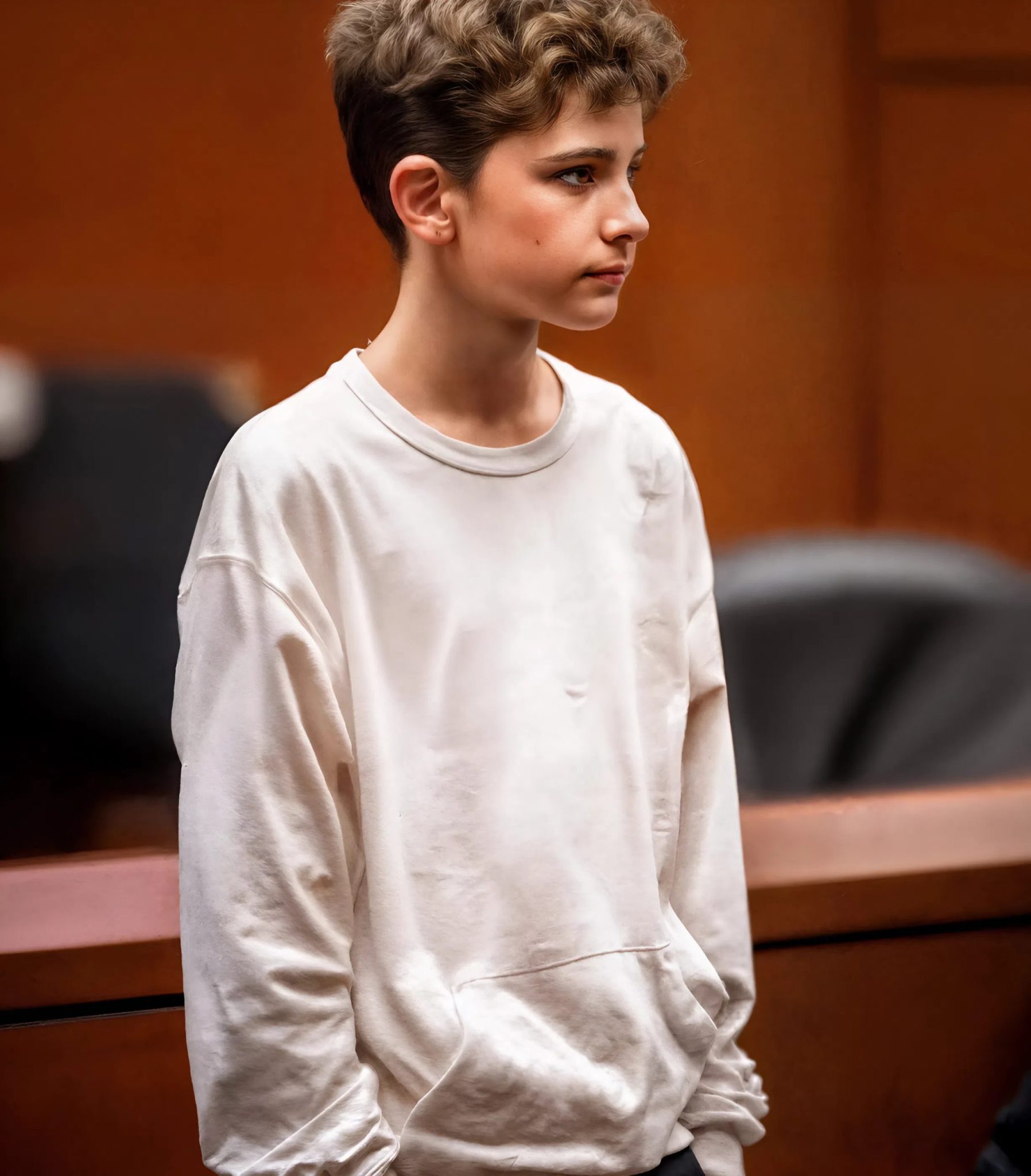
My son, who was placed in a foster family, never uttered a word… until the day the judge asked him a question.
When Sylvie opens her home to a nine-year-old boy who doesn’t speak, she doesn’t expect to ever hear his voice. Yet over the years, something deeper develops between them — woven from silent gestures, small acts of kindness and unconditional love. Until the day when, in the courtroom, he finally finds his words.
I said ‘yes’ not because I thought I could ‘fix’ him.

I said ‘yes’ because the house had been too quiet for too long, and I knew that kind of silence. His silence, however, was different — wary, anxious…
Mine came from pain. His came from something I shouldn’t have asked questions about.
I said ‘yes’ not because I thought I could fix him.
‘He’s nine years old,’ the social worker told me, pausing just long enough for the words to sink in. ‘He doesn’t talk, Sylvie. At all. And to be honest, most families turn him down.’
‘I’m not “most families”, Estella,’ I replied.
I didn’t need more noise. I needed someone who understood silence and accepted love, even when it was expressed through it.
‘I’m not “most families”, Estella.’
After three miscarriages and a husband who finally said he ‘couldn’t hope for something that never happens anymore,’ I learned to live with absence.
When he left, he took with him the last crumb of my expectations. But not my ability to love. That remained.
And sooner or later, it needed somewhere to go.
I didn’t wake up one morning with a ready answer. Everything was slower. I started volunteering at library readings, then began collecting food parcels for a shelter. I told myself I was just keeping busy, but one afternoon I found myself holding a forgotten child’s jacket… and I couldn’t let it go.
But not my ability to love. That remained.
And then I understood.
A week later, I filled out the forms. The training took time. So did the checks; but when the folder arrived in the post — thick, heavy with hope — I held it to my chest as if it had a pulse.
‘All you need to do now… is wait,’ I said to myself in front of the mirror. ‘Your baby will come, Sylvie.’
And when they called me and asked if I could take in a child that no one wanted, I said ‘yes’ without hesitation.
‘Your baby will come, Sylvie.’
Little Alan arrived with a backpack and a look that made people uncomfortable. He didn’t cry or flinch. He stopped at the door and looked around, as if marking all the ways out.
‘Hello, sweetie,’ I said, holding out my hand. ‘Hello, Alan. I’m Sylvie.’
He didn’t take it. He walked past me and sat down on the edge of the sofa. I offered him hot chocolate and biscuits. He nodded, a hint of a smile on his lips.
He stood in the doorway, watching, as if memorising all the exits.
And so it began.
That evening, I read aloud to him. He didn’t look at me, but he didn’t leave the room either. That… was enough.
I didn’t force Alan to talk. I just lived next to him, leaving room for sound — if he ever wanted to come.
I cooked him meals and left little handwritten notes, not expecting a reply. Sometimes they were silly jokes — about squirrels stealing my tomatoes. Sometimes they were something more tender.
I didn’t force Alan to talk.
‘I’m proud of you, my dear.’
‘You’re doing great, Alan.’
‘You are the light I’ve always dreamed of.’
For weeks, they came back crumpled… or didn’t come back at all. And then one day I noticed one, neatly folded and placed on the kitchen counter. I opened it and saw my words — whole, neat, clean.
‘You are the light I have always dreamed of.’

‘He kept it…’ I whispered, tears in my eyes.
I cooked and told him stories while cutting vegetables. Little stories — like how I once broke my ankle chasing a runaway kitten, or how I tried to bleach my hair and ended up with orange roots.
‘It was awful, my dear! Really, Alan, I looked ridiculous! I couldn’t leave the house for a whole week.’
He never replied, but sometimes his shoulders would twitch slightly, as if he were laughing quietly.
I showed him the birds nesting on the porch, the shapes of the clouds, and the song that reminded me of my mother. His silence did not seem like rejection to me. Rather, it was like someone listening with great attention — as if he were learning the language of safety, the language of security.
Over time, Alan began to sit closer during our evening reading. Then he started waiting for me at the door while I looked for my keys. If I forgot my scarf, he would silently hand it to me.
That winter, when I fell ill, I woke up feeling exhausted and in pain all over my body and saw a glass of water on the bedside table and a neatly folded note next to it.
That was when I realised for the first time that he cared about me too.