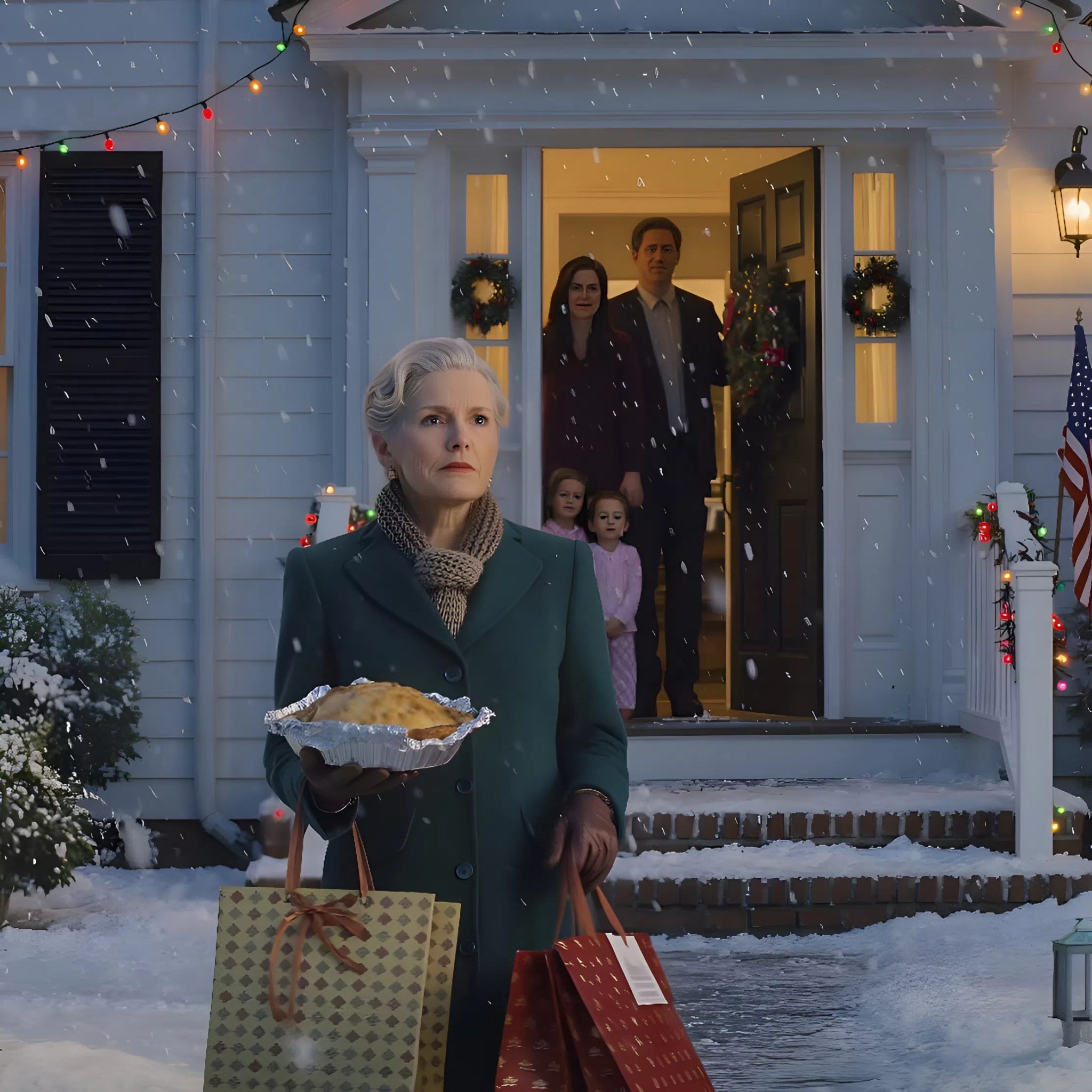
I always thought I was doing everything right. My name is Margaret Anderson. I raised my son David on my own after my husband died when David was only five. I worked two jobs — as a nurse at a hospital and cleaning offices in the evenings — to send him to college. I never remarried. David was my everything, my reason for living, my pride and joy.
When David finished medical school and became a cardiologist, I felt like I could breathe again. Five years ago, he married Jennifer, a real estate agent. At first, she seemed nice enough—polite, proper, always smiling.
However, things soon began to change. Weekly phone calls became monthly, and invitations to Sunday dinners stopped. When I asked David about it, he said, ‘Mum, we’re just so busy. You understand, right?’
Last Christmas season was different. I hadn’t seen my son in four months. When I called to ask about Christmas plans, Jennifer answered the phone.
‘Oh, Margaret,’ she said in a cold, sweet voice. ‘We’re not planning a big celebration this year, just immediate family.’
‘But I am immediate family,’ I replied, confused.
‘We’ll call you on Christmas Day,’ she said and hung up.
Something tightened in my chest, but I suppressed the feeling. I told myself I was being overly sensitive and that David couldn’t possibly exclude his mother from Christmas.
Two days before Christmas, I decided to visit them. I baked David’s favourite apple and cinnamon pie, using a recipe his grandmother had given me. I bought presents for my grandchildren, Emma and Jake, aged eight and six — children I hardly knew, as visits had become rare.

The trip took three hours. Snow was falling softly, making everything look like a postcard. Their house, a beautiful two-storey colonial that I had helped with the down payment on, glowed with warm lights and Christmas decorations. I could see the Christmas tree through the window, with wrapped presents underneath it and stockings hanging on the fireplace.
I rang the doorbell, holding my pie in my hands, full of hope.
David opened the door. His face — oh God, his face — changed from surprise to something dark. Irritation. Anger.
‘Mum, what are you doing here?’ he asked.
‘I came for Christmas, dear. I brought your favourite pie.’
‘And who invited you?’
His voice was sharp, burning. I stood there frozen, snow melting on my shoulders.
Jennifer appeared behind him, her expression carefully neutral.
‘David, what—’
‘Oh, Margaret.’
‘I’m your mother,’ I said quietly, looking at my son.
‘I thought this was just for family,’ David said.
Behind him, I noticed Emma and Jake peeking around the corner, their eyes wide.
‘We discussed boundaries, Mum. You can’t just show up uninvited.’

‘Since when do I need an invitation to see my son at Christmas?’
Jennifer put her hand on David’s shoulder, as if to assert her rights.
‘Margaret, we asked you to respect our space. We already have our own traditions, our own family.’
‘I’m your mother,’ I repeated, my voice breaking.
Was I really standing here arguing about my right to be part of my son’s life?
David’s jaw tightened.
‘You need to leave right now. This is humiliating.’
The word hit me like a slap in the face.
Humiliating.
A mother is humiliating.
‘David, please, go away, old woman. This is family time, and you’re not welcome here.’
The door slammed shut in my face.
I stood there in the snow with the pie in my hands, looking at the wreath on their door. Inside, I could hear Christmas music playing. Laughter. My grandchildren asking, ‘Daddy, who’s that?’
I don’t remember how I got back to the car. I don’t remember the drive back, but I do remember sitting in my dark, cold house that night, looking at the small Christmas tree I had decorated alone, and feeling something inside me break.
And then, slowly, something else took its place. Not sadness. Not grief. Something colder, harder, more determined.
By morning, I knew what I had to do.
On Christmas morning, I woke up at 5:00 a.m., as I had done for forty years as a nurse. But I had nowhere to go. The house was silent except for the ticking clock in the kitchen. I made coffee and sat down at the kitchen table—the same table where I had helped David with his homework, where we had celebrated his acceptance into medical school, where I had cried the night my husband died.
What had just happened?
I took out a notebook — an old habit from my nursing days, when documentation meant everything — and began to write. Facts, without emotion. Facts.
Fact one: David and Jennifer deliberately excluded me from Christmas.
Fact two: This wasn’t the first time. It had been building for two years.
Fact three: I have no legal right to see my grandchildren. None.
Fact four: I gave David £60,000 for the down payment on his house, never asked for it back.
Fact five: I cosigned his medical school loans and paid off $15,000 when he was having difficulties.
Fact six: I am still listed as the emergency contact for the children at school. Jennifer forgot about that.
This last fact made me think.