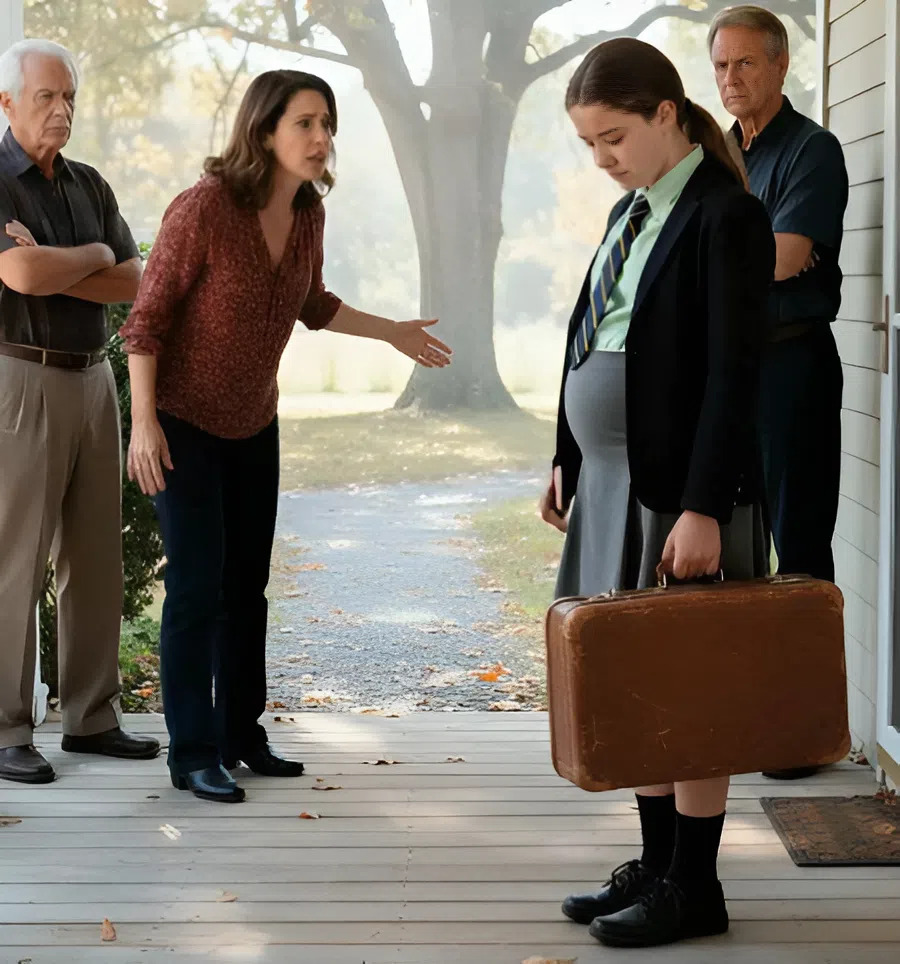
At just fourteen years old, Emily Harper stood on the porch with a trembling suitcase and cheeks wet with tears.
The late September air in Cedar Springs, Kentucky, was crisp, carrying the scent of rain and broken promises.
Behind her, her mother’s voice cracked through the wooden door like a final sentence.
“You’ve brought shame on this house, Emily.
Don’t come back.”
Emily didn’t argue.
She simply clutched her stomach — the small life that had made her an outcast — and took her first step into exile.
That night, she walked many miles, her trainers soaked, her heart heavier than her bag.

Every porch light she passed reminded her of what she had lost: warmth, family, the right to be a child.
When a kind stranger named Ruth found her shivering at a petrol station, Emily could barely speak.
Ruth, a nurse from a neighbouring town, gave her a blanket, a place to sleep, and—most importantly—the feeling that someone still saw her as a human being.
For several months, Emily lived quietly in Ruth’s small flat above a laundromat, working part-time and attending night school under a different name.
When her daughter Lily was born in the spring, Emily was still a child herself — frightened but determined.
She made a promise to herself as she held her baby for the first time:
‘You will never feel unloved like I did.’
The years turned into a struggle for survival.
Emily learned to juggle work, childcare and evening classes until exhaustion became the norm.
By nineteen, she had earned her secondary school diploma.
By twenty-three, she had earned her nursing licence.
And by twenty-eight, she had built a modest but stable life in Nashville—not glamorous, but safe.
Still, on quiet evenings when she put Lily to bed, she sometimes wondered if her mother thought about her.
Or about the granddaughter she had never seen.

Then the phone rang.
The number was unfamiliar, but the voice on the other end made her blood run cold.
‘Emily,’ said her brother Daniel, his tone fragile.
“You need to come home.
Mum’s not well.”
For a moment, she found it difficult to breathe.
The home that had rejected her was calling her back — not out of forgiveness, but out of desperation.
Emily looked at her daughter, who was fourteen herself, with the same green eyes she had once seen in the mirror.
‘I don’t know if I can face them,’ Emily whispered.
But deep down, she knew she could.
The road back to Cedar Springs was almost unchanged — the same cracked billboards, the same ramshackle barns, leaning in the wind.
But Emily had changed.
She was no longer that frightened teenager; she had become a woman who fought for every inch of her dignity.
Nevertheless, as she drove down Maple Drive and saw the Harper farmhouse on the horizon, her hands trembled on the steering wheel.

Lily looked out the window.
‘So this is where you grew up?’
Emily nodded.
‘Yes.’
‘This house used to be my whole world.’
Her voice trembled as memories came flooding back—her mother singing gospel songs while cooking, her father repairing the fence, Daniel teasing her about her pigtails.
But they were quickly overshadowed by the night when she left—the screams, the slamming door, the silence.
When she parked, Daniel was the first to come out.
He was older, broader in the shoulders, with wrinkles around his eyes that hadn’t been there before.
‘Um,’ he said softly.
‘You came.’
She hesitated before embracing him.
‘You didn’t have much choice.’
Inside, the house smelled the same — old pine floors and something with a slight floral scent.
But time had robbed it of its warmth.

Their mother Margaret sat on the sofa with a blanket over her knees.
Her hair, once chestnut brown and proud, was now silver, her face pale and worn.
For a moment, Emily saw not the woman who had cast her out, but someone small and fragile — a human being.
‘Hello, Mum,’ Emily said.
Margaret’s eyes widened as if she had seen a ghost.
‘Emily?’
‘It’s me.’
Her mother’s lips trembled.
‘You… you shouldn’t have come.’
The words hit her like a slap in the face, but Emily didn’t flinch.
‘Daniel said you were ill.’
‘I don’t need your pity,’ Margaret replied, turning away.
Lily stood motionless in the doorway until Emily put her hand on her shoulder.
‘Mum, this is Lily.’
‘Your granddaughter.’
A silence stretched between them.
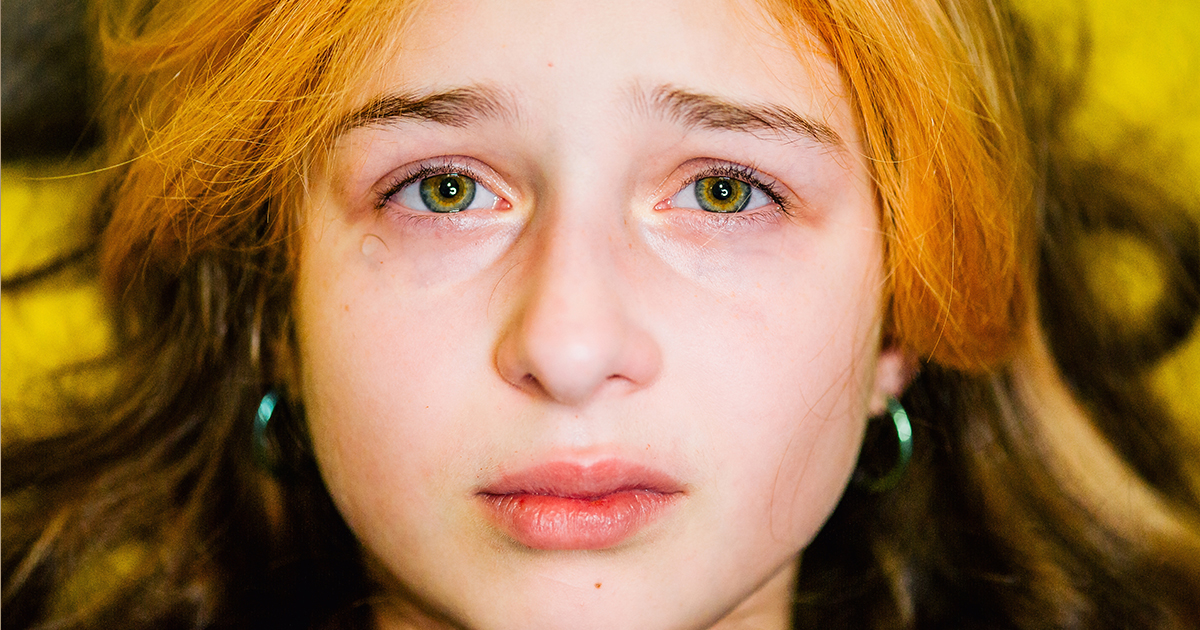
Then Margaret’s eyes softened as she looked at the girl.
‘She’s… she’s beautiful,’ she whispered.
‘Just like you used to be.’
Dinner that night was filled with unspoken words.
Daniel tried to fill the air with small talk, but tension hung heavy in the room.
When Lily went to bed, Margaret finally spoke.
‘I prayed every day that God would forgive you,’ she said quietly.
‘But I couldn’t.’
‘Not after what you did.’
Emily’s throat tightened.